
Sentiform Insights March 21, 2026 UPDATE
Workplace & Office Branding Trends (2026 Update)
The role of workplace branding is shifting. As offices become less about daily attendance and more about culture, identity, and collaboration, the spatial layer carries more weight than it did five years ago. A branded environment is no longer a nice-to-have. It’s how a company communicates what it stands for to the people who walk through it every day.
Here’s what we’re seeing in 2026.
Workplace branding is evolving to meet the hybrid era
What’s Happening:
Employees visit the office less often. When they do, the space needs to do more work. Workplace branding has shifted from decoration to infrastructure: the layer that communicates culture, reinforces belonging, and makes a space feel worth the commute. Not through slogans or logo walls, but through materials, graphics, and spatial detail that people absorb without thinking about it.
What to Expect:
- Visual and physical brand touchpoints that reinforce identity and values, whether someone visits daily or once a month.
- Storytelling carried through the environment, not just a logo at reception. Murals, naming systems, and environmental graphics that give the space character.
- Multi-use spaces designed as collaboration hubs, social areas, and creative zones that support both in-person and hybrid work.
A Brighter Brand Presence —
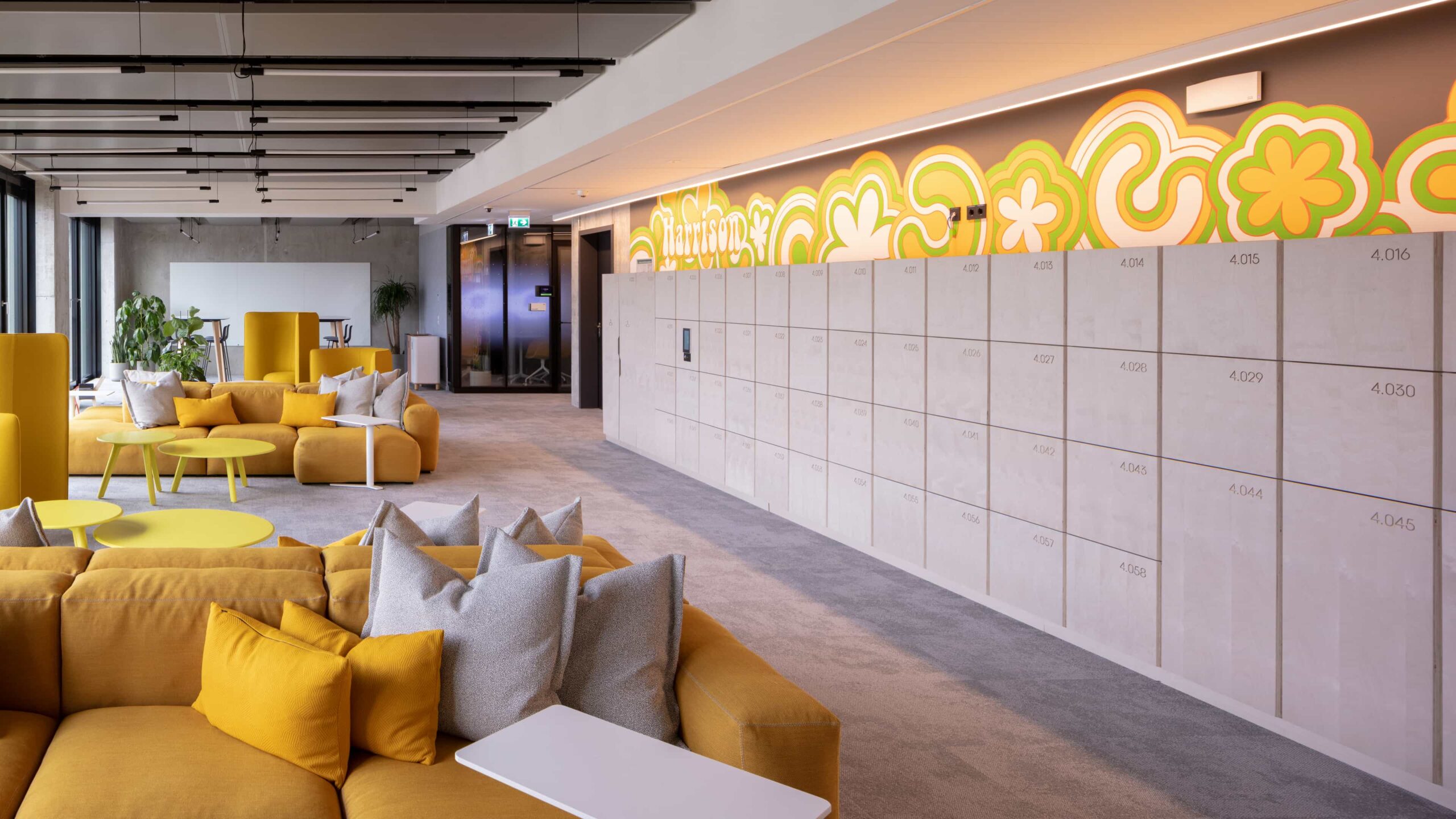
Inspired by George Harrison’s Here Comes the Sun, this hand-painted mural blends Contentful’s identity with the lounge, complementing toi toi toi creative studio‘s yellow-themed interior design. More than decoration, it extends the brand beyond guidelines. Transforming the space into a bold expression of company culture. Discover more of this project →
Wellness-driven workplace branding is enriching the employee experience
What’s Happening:
Employee well-being has shifted from a perk to a necessity. Companies recognize that workplace branding isn’t just about applying a logo or brand colors throughout an office but about designing spaces that support focus, creativity, and comfort. A company’s branding should be translated into the workplace to enhance the employee experience rather than overwhelming the environment with visual elements that might be distracting or fatiguing.
What to Expect:
- Thoughtful brand identity integration into materials, textures, and spatial layouts rather than relying solely on color schemes defined in the brand guidelines.
- Design that prioritizes comfort and usability, ensuring the brand supports employee well-being rather than dictating the entire aesthetic.

Playful Branding with a Retro Twist—This custom 8-bit video game-inspired design brings a nostalgic, interactive feel to the workplace games lounge, adding personality and a touch of fun to the space. Discover more of this project →
Wayfinding as a brand discipline
What’s Happening:
Wayfinding has moved beyond arrows and room numbers. The best systems carry the identity of the place through every sign, surface, and decision point. But expression without clarity is just decoration. The challenge is designing wayfinding that has character and personality while remaining intuitive on the first visit.
What to Expect:
- Signage that extends the brand into physical space, with typography, materials, and placement shaped by the interior.
- Visual cues that make navigation intuitive: colour-coded zones, thematic floor graphics, and custom pictogram families.
- Function-first thinking. Clear, concise information design that helps employees and visitors orient themselves immediately.
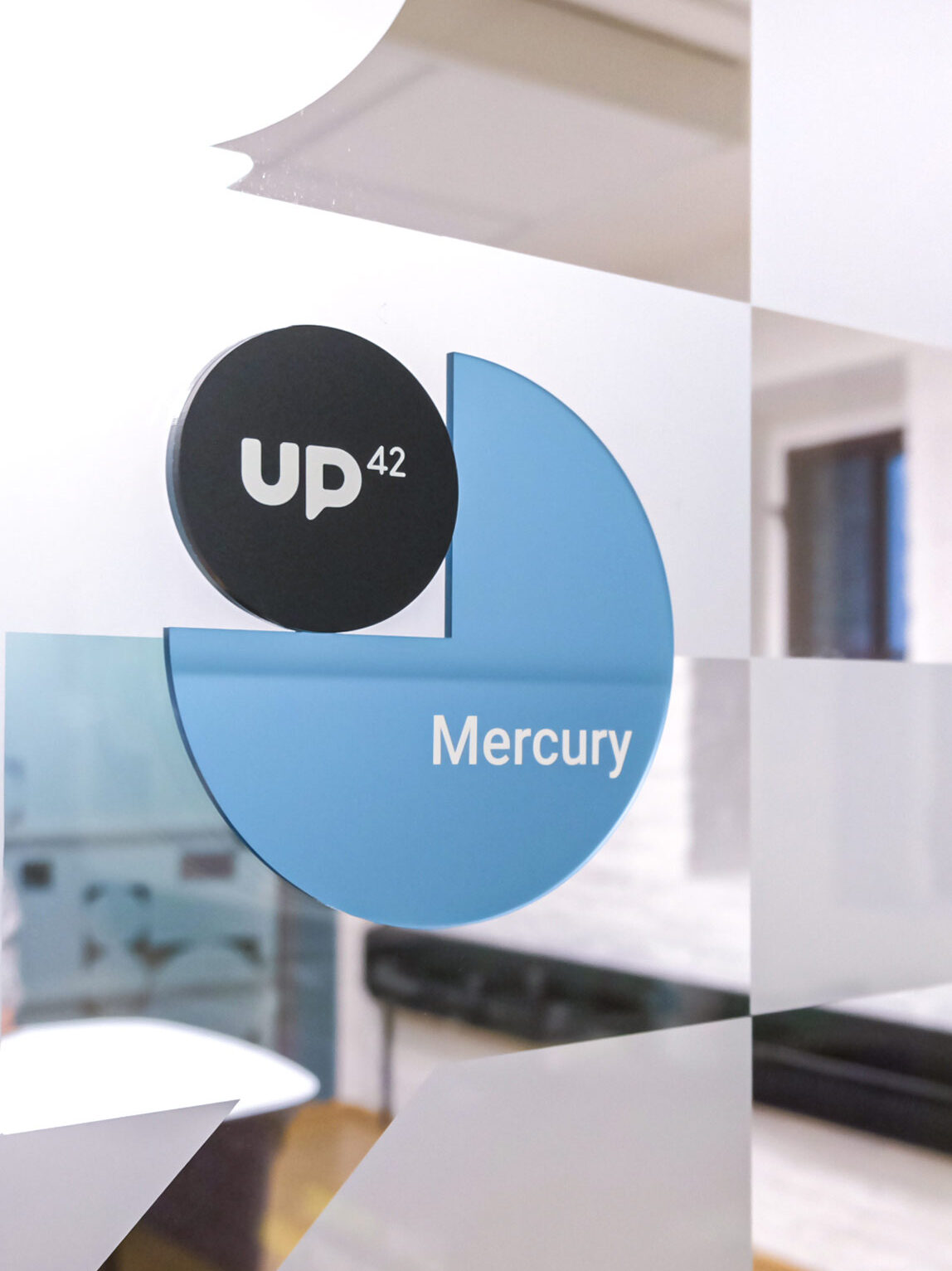
Signage That Speaks the Brand: More than names on doors, these meeting room signs create a tactile brand experience, integrating identity into the daily life of the workplace. Discover more of this project →

Beyond the Brand Guidelines: Wall graphics shaped by place, not just by the manual. In the Grunewald-themed meeting room, they set the atmosphere and express the brand’s personality within the space. Discover more of this project →

Functionality at a Glance: Thoughtfully designed pictograms make navigation effortless, helping employees and visitors find what they need without reading a word. Discover more of this project →

Wayfinding with Personality: This IT Help Desk sign shows how signage can do more than guide. It brings brand character into the workplace, reflecting Contentful’s playful and quirky identity. Discover more of this project →
Spatial branding is expanding beyond the office
What’s Happening:
Workplace branding grew up in tech headquarters and corporate offices. In 2026, the same thinking is moving into factories, production facilities, logistics centres, and R&D campuses. Companies that invest in their built environment are recognising that identity and culture matter everywhere people work, not just in the spaces designed for visitors.
A production floor, a warehouse, a laboratory. These are workplaces too. The people in them deserve the same spatial consideration as those in a glass-walled headquarters. And the companies that understand this are using wayfinding, environmental graphics, and spatial branding to make these environments legible, safe, and distinctly theirs.
What to Expect:
- Wayfinding systems designed for complex, high-circulation environments where clarity is not optional. Factories, logistics hubs, and campuses with multiple user groups moving through the same space.
- Spatial branding that connects satellite facilities to the identity of the wider organisation. A factory that feels like it belongs to the same company as the headquarters.
- Increased demand for studios that can work across both office and industrial environments, resolving the spatial layer as one coherent system regardless of building type.
Purpose-driven workplace branding is becoming the standard
What’s Happening:
Branded elements in workplace design are no longer decorative. They serve as functional and cultural touchpoints that enhance both aesthetics and usability. Glass panels, wall graphics, and architectural details offer companies an opportunity to extend their brand beyond logos and color schemes, embedding storytelling and identity into the workspace itself.
What to Expect:
- Custom-designed glass panels that turn office partitions into branding surfaces, balancing privacy, storytelling, and aesthetics.
- Architectural branding elements that go beyond traditional visuals, incorporating materials, textures, and spatial design into a cohesive brand experience.
- Wayfinding and spatial branding that integrate identity into the built environment, making workplaces more intuitive and easier to navigate.
Where Brand Meets Function: Glass surfaces offer a unique canvas for brand identity. At UP42, Earth-inspired abstractions from satellite imagery transform meeting rooms, merging aesthetics, brand, functionality, and privacy. Discover more of this project →

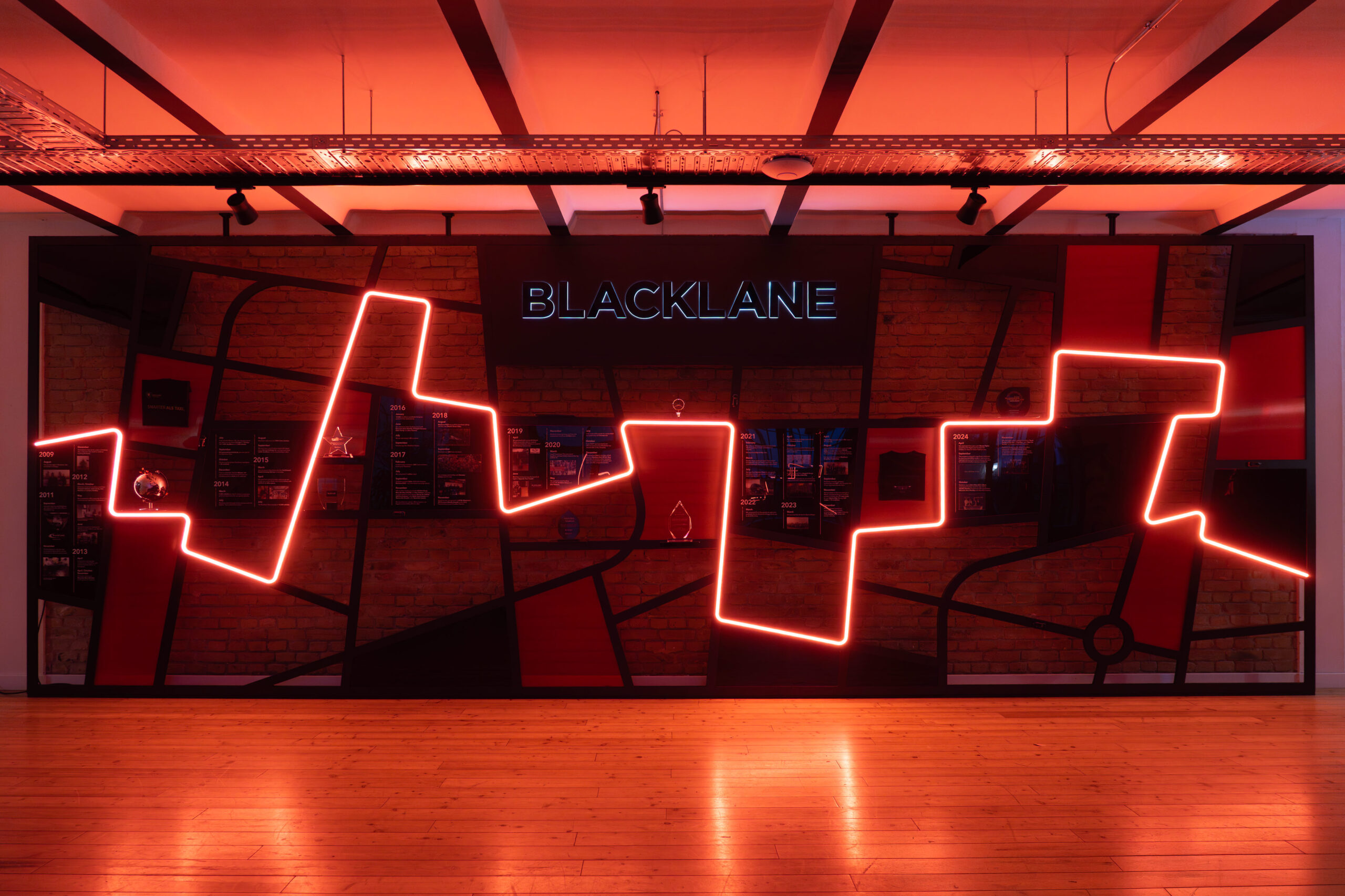
Driving heritage forward:
A company timeline designed as a signature moment for Blacklane HQ. Part story, part spatial branding, it sets the tone on arrival and gives the workplace a clear point of identity. Discover more of this project →
The return of tactile brand experiences
What’s Happening:
Employees are tired of screens. In workplaces oversaturated with digital displays, the physical environment has become the counterbalance. Companies that over-invest in digital signage often find it outdated or ignored within months. The shift is toward tangible, crafted brand moments that hold their value over time: bespoke murals, company timelines, textured wall graphics, and custom-built installations that improve the environment without overwhelming it.
What to Expect:
- Fewer screens, more physical presence. Custom-made, crafted elements that employees interact with and notice over time.
- Bespoke murals, 3D installations, and sculptural wayfinding that make spaces feel considered without relying on technology.
- Greater emphasis on craftsmanship and materiality. Hand-painted graphics, considered textures, and material choices that make workplaces feel human.

A Bold Tribute to a Female Tech Pioneer—At Contentful, a 12-meter mural of Ada Lovelace—the world’s first computer programmer—offers a unique way to bring the company’s inclusive and diverse values into the workplace, celebrating innovation, progress, and the impact of women in technology. Discover more of this project →
Workplace branding as the carrier of company culture
What’s Happening:
Workplace branding is no longer a visual exercise. It is a cultural one. The office has become a storytelling canvas where employees can see, feel, and engage with what their company stands for. The strongest workplace branding doesn’t illustrate culture. It carries it through the environment, in the materials, the naming, the graphics, and the spatial decisions that shape daily experience.
What to Expect:
- Branded team zones that reflect company identity and encourage collaboration through spatial design, not just furniture selection.
- Murals and installations that tell a company’s story in ways that reward repeated encounter. Not one-time moments, but details that reveal themselves over time.
- Cultural storytelling carried through materials, spatial design, and environmental graphics that create a genuine connection between employees and their workplace
A Workplace Rooted in Its Surroundings—At Contentful’s Berlin office, this Bauhaus-inspired mural pays tribute to Peter Behrens, the pioneering Bauhaus architect behind the neighboring AEG Kleinemotorenfabrik. More than branding, it connects the workplace to its cultural and historical context, creating a deeper sense of place. Discover more of this project →

Workplace branding specialists are becoming key partners
What’s Happening:
Many companies have internal brand and design teams. But translating a brand into a physical environment is a distinct discipline. When internal teams apply a brand system directly to a space, the result often reads as a literal interpretation of the guidelines rather than a considered spatial experience. The gap between brand-on-screen and brand-in-space requires specialist knowledge of materials, fabrication, wayfinding logic, and spatial storytelling.
What to Expect:
- A shift toward strategic, experience-driven workplace environments that reflect company culture through spatial decisions, not surface-level applications.
- More companies engaging specialist studios to bridge the gap between brand guidelines and built environment, particularly as Workplace Experience leads and People & Culture teams take ownership of the physical space
- Specialist partners bringing deep knowledge of fabrication, materials, and production coordination, removing the burden of sourcing and execution from internal teams.
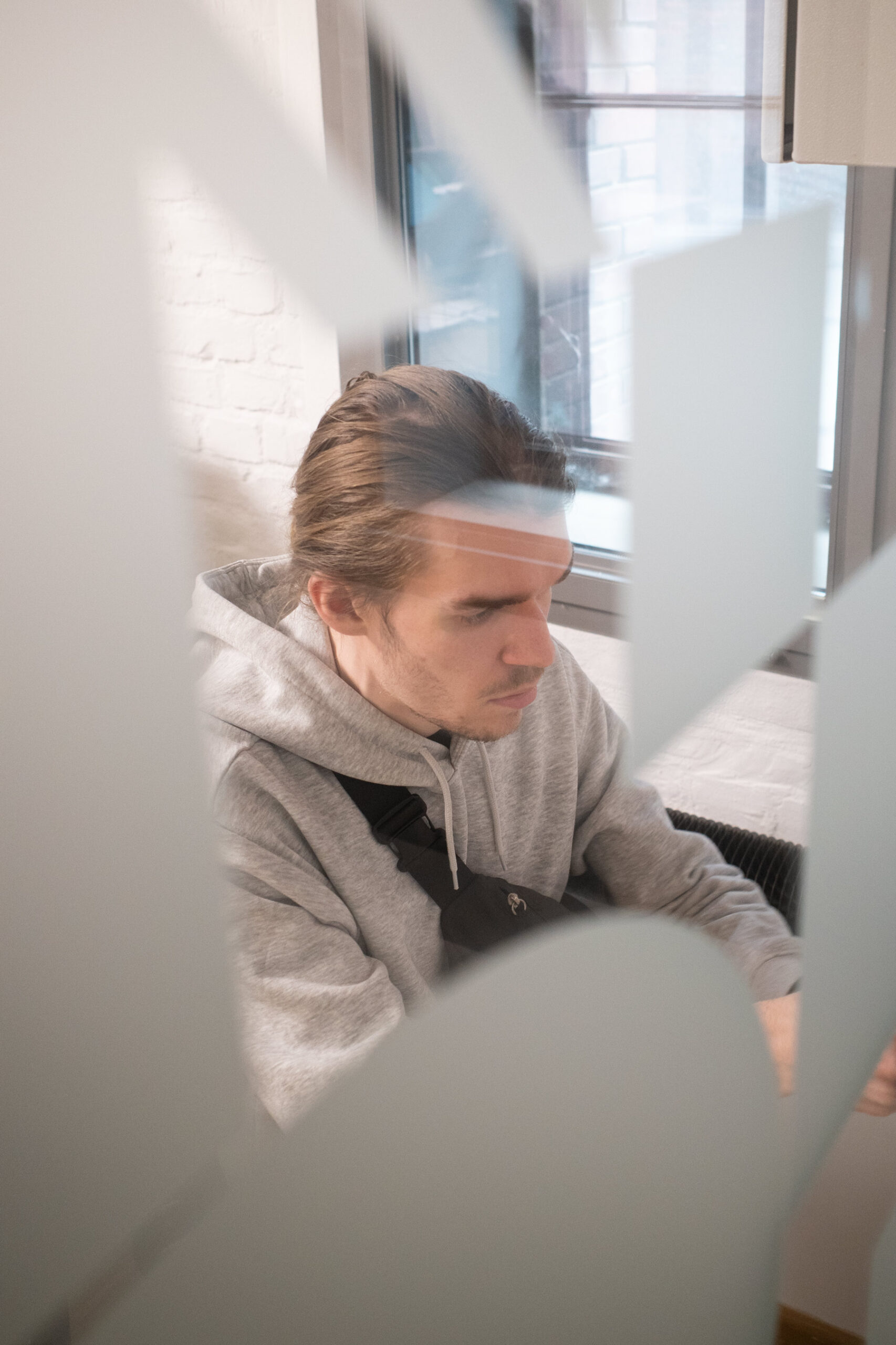
Expertise That Elevates Workplace Branding — Translating a brand into physical space requires more than applying a design system. It requires spatial thinking, material knowledge, and a production network that can deliver at the standard the design demands.

Conclusion
The direction is clear. Workplace branding in 2026 is less about visual impact and more about spatial intelligence: how identity, culture, and orientation are resolved through the built environment. The companies investing in this layer are creating spaces people navigate intuitively, recognise immediately, and value over time.
Text: Sentiform. Photos: Koy+Winkel, Sentiform, Sprühsinn
Last Update : March 21, 2026
Get In Touch
Tell us about your space.
A few well-placed touchpoints can change how a space is used and how it is remembered.